

PLRI is committed to examining the strengths and weaknesses of international human rights and domestic legal frameworks as they apply to sex work. We aim to evaluate the impact of various international and domestic laws and policies on the human rights of female, male and transgender sex workers and their communities.
Sex workers universally claim that their human rights are abused. In some cases this means exposure to violence and barriers to accessing services, resources and justice. In other cases arbitrary detention, criminal law and lack of access to clean safe places to live and work are cited as human rights issues.
International human rights standards and norms have traditionally constructed sex work as an affront to human dignity and as a result have failed to endow sex workers with the range of rights normally accorded to others unimpeded by occupational or moral status. The conflation of adult female prostitution with trafficking and child abuse that has occurred this decade has lead to the revival of law enforcement in many countries which appears to have lead to human rights abuses.
Questions about what legal and policy approaches can best protect sex workers, clients and the broader society are of great importance to sex worker advocates. PLRI seeks to illuminate a range of issues around law and human rights in respect of sex work and aims to resource sex workers to engage in local, national and international debates about what mix of laws and policies can best protect and advance their human rights.
- The International Association for the Study of Sexuality, Culture and Society 2011 Conference: A summary of the content related to sex work – 2011
- The price of sexual services in nightclubs and massage parlors of San José, Costa Rica: biological and anthropological interpretations – 2011
Humans and other primates exchange sex for resources. In the case of humans, this exchange includes sexual work. There are few previous studies on sex work in San José, Costa Rica that include data on how much is paid for sexual services. We studied the price of female sex work, and how the profits are distributed among all parties, in nightclubs and massage parlors, by obtaining data from interviews with workers and owners, and from telephone calls, from 1994 through 2010.
- The Role of Housing in Determining HIV Risk among Female Sex Workers in Andhra Pradesh, India: Considering Women’s Life Contexts – 2011
Article in Social Science & Medicine Volume 72, Issue 5, March 2011, Pages 710-716.
- The Social Construction of Sex Trafficking: Ideology and Institutionalization of a Moral Crusade – 2011
Article in Politics & Society September 2007 vol. 35 no. 3 447-475.
- The Swedish Sex Purchase Act: Claimed Success and Documented Effects – 2011
This is a very good article that presents a strong case that the criminalisation of clients in Sweden has not been successful in any terms. It contains fascinating statistics about the extent of trafficking in Sweden and illustrates the lack of integrity and rigour of claims that support ‘the Swedish Model’.
It also provides a compelling case for looking closely at the true consequences of measures aimed at limiting sexual exploitation and sex trafficking.
- Trafficking in human beings – 2011
Chapter in Laura J. Shepherd (Ed.), Gender Matters in Global Politics: A feminist introduction to international relations (pp. 89-101) Abingdon, Oxen, U.K.: Routledge.
- Trafficking? Exploring the relevance of the notion of human trafficking to describe the lived experience of sex workers in Cape Town, South Africa – 2011
This article reports on the findings of a study of the sex work industry in Cape Town that was undertaken by the Institute for Security Studies (ISS) and the Sex Worker Education and Advocacy Taskforce (SWEAT) between 2006 and 2008. The study employed qualitative and quantitative methods to gather data about inter alia, the size of the sex work industry in Cape Town, working conditions in the industry, recruitment practices, factors that resulted in women working in the industry, and the extent of human trafficking in the industry.
- Verbal Abuse: Anti-Trafficking Rhetoric and Violence Against Women – 2011
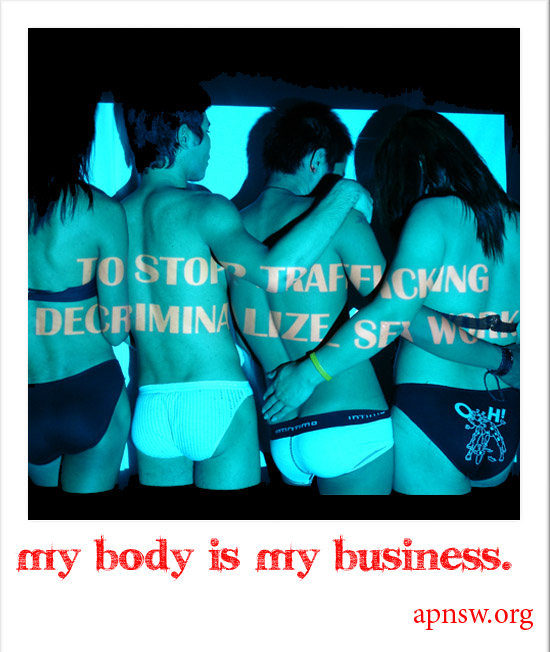
Sherief Gaber offers a fascinating and thorough analysis of anti-trafficking rhetoric and the ideology and actions it drives.
- Violence against sex workers is prevalent in Cambodia with customers and the police often the perpetrators – 2011
Passed to protect women, the 2008 law on human trafficking and sexual exploitation has been used by authorities to justify the harassment and abuse of sex workers.
But, Cambodian sex workers say it’s now time to demand their rights.Hundreds are gathered in the capital of Phnom Penh.They are clapping loudly as the host welcomes the first day of 16 days of activism against gender violence.They are wearing white shirts with the slogan: “United we can end violence against women and bring the peace.”
- What Do Transgender Women’s Experiences Tell Us about Law? Towards an Understanding of Law as Legal Complex – 2011
Based on ethnographic study conducted in Istanbul, this thesis investigates the effects of law and legal operations on transgender women’s sex work and daily lives, and seeks to disentangle the multidimensional ways through which they and their conduct are governmentalized by law in Turkey. The first part of the thesis discusses the legal dynamics surrounding transgender sex work and delineates how transgender women are expulsed from regulated sex work by the interaction of the socially produced desire around their bodies and law.
- Can rights stop the wrongs? Exploring the connections between framings of sex workers’ rights and sexual and reproductive health – 2011
There is growing interest in the ways in which legal and human rights issues related to sex work affect sex workers’ vulnerability to HIV and abuses including human trafficking and sexual exploitation. International agencies, such as UNAIDS, have called for decriminalisation of sex work because the delivery of sexual and reproductive health services is affected by criminalisation and social exclusion as experienced by sex workers.
- Casa Xochiquetzal : sex workers rights in action – 2011
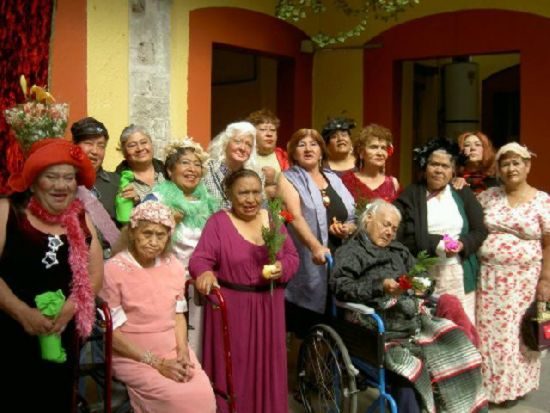
- Chickenheads, agents, mommies, and jockeys: the social organization of transnational commercial sex – 2011
An article in Crime, Law and Social Change Volume 56, Number 5, 463-484.
- Clients of Female Sex Workers: A Population-Based Survey of China – 2011
An article in the J Infect Dis. (2011) 204 (suppl 5): S1211-S1217.
The control of HIV and other sexually transmitted infections (STI) is a challenge in China, with female sex workers (FSW) and male clients suspected as bridge groups. This study used a 2006 national probability survey of 2,707 adult men. Among men 15–49 years old, the prevalence of FSW contacts last year was 4.2% (95% CI, 3.3–5.2) overall, with 7.2% (CI, 5.9–8.7) in urban and 1.8% (CI, 1.0–3.3) in rural areas.
- Combating trafficking in sex work sites‐Durbar’s successes and challenges – 2011
Durbar, (a sex worker group in Kolkata,) has been carrying out Anti
- Commercial Sex Work in Addis Ababa – 2011
Unlike the situation a few decades ago, commercial sex in Addis Ababa has increasingly become an occupation of women born and brought up in the city.
A new study, “Poverty and the Social Context of Sex Work in Addis Ababa”, by Bethelehem Tekola*, indicates that more than 50% of the women who are engaged in commercial sex are born and grew up in the city.
- Common Human Rights Violations Experienced by Sex Workers – 2011
This document pairs common violations experienced by sex workers with relevant provisions of major human rights treaties. The violations included in this document were reported by European and Central Asian sex worker organizations and advocates, who are members of the Sex Workers’ Rights Advocacy Network (SWAN).
- Communication and community mobilization, anti-trafficking and legitimization, participation and empowerment: HIV/AIDS intervention and the Sonagachi Project – 2011
HIV/AIDS infection is a serious threat to the health and welfare of India. HIV/AIDS and sexually transmitted infections (STI) are primarily propagated through heterosexual intercourse in India. Sex workers having multiple partners are considered to be conduits of virus transmission. Hence interventions targeting sex workers form a significant part of India’s effort to curb the HIV/AIDS pandemic within its borders.
- Coverage of Four Key Populations at the 2010 International AIDS Conference: Implications – 2011
The Global Forum on MSM & HIV reviewed every abstract and session at the 2010 International AIDS Conference. Their analysis revealed a ‘gross underrepresentation’ of key populations (men who have sex with men, sex workers, transgender people and people who use drugs) across the 2010 conference programme.
Unfortunately this report does not address the reasons why sexual minorities were excluded or examine any of the mechainics of how it came about. Nor does it offer any suggestions for the future.
- CREA research on violence against women in India, Bangladesh and Nepal – 2011
A research study on violence against lesbian women, female sex workers, and disabled women in three countries in South Asia—Bangladesh, India, and Nepal. The study investigated the hypothesis that women who are outside the mainstream of the South Asian society suffer high rates of violence and are often unable to seek and receive protection from State agencies.
- Men and Development: Politicizing Masculinities – 2011
‘Men and Development: Politicizing Masculinities’ includes a chapter entitled ‘The Good, The Bad and The Ugly: Constructions of Masculinity and Contemporary Understandings of Sex Work’ that looks at men as buyers and sellers of sex and desconstructs the myth of the ‘pimp’.
- Myths About Human Trafficking – 2011
In an article in the Huffington Post US academic Ronald Weitzer provides a clear explanation of why the claims being made about sex trafficking by celebrities, charities, UN and government agencies should not be taken at face value.
- New Initiative on Sex Work in Botswana – 2011
A new sex workers initiative in Botswana has included a Lesbian, Gay, Bisexual, Transgender, Intersex and Questioning (LGBTIQ) component in their programme.
Sisonke Botswana, a sex work group currently housed by Botswana Network on Ethics Law and HIV/AIDS (BONELA), joined the African Sex Workers Alliance and dedicated a week to the mapping of sex workers rights in Botswana with the aim to forming a coalition which will advance the human health rights of most key population (sex workers, transgender, MSM and drug users).
- Nongovernmental organisations and sex work in Cambodia: Development perspectives and feminist agendas – 2011
This project focuses on nongovernmental organizations (NGOs) in Cambodia that deal, either directly or indirectly, with sex work and sex workers. The NGOs outlined in this study have goals ranging from preventing Cambodian women from entering the commercial sex industry to empowering Cambodian sex workers through the formation of sex worker unions.
- Occupational health and safety among commercial sex workers – 2011
Review : Ross, Crisp, Månsson and Hawkes have published “Occupational Health and Safety Among Commercial Sex Workers” in the latest ‘online first’ edition of the Scandinavian Journal of Work Environment and Health. At first look the article appears to be a welcome contribution to efforts to place sex work within the realm of labour and outside what the piece itself terms “moral discourses that ignore, devalue, or condemn commercial sex workers” (page 1). However it also disappoints in fundamental respects. Its contribution to strategies for improving sex worker OHS is limited and the suggestions for legal reform seem to betray the authors’ ambivalence about the existence of the industry itself.
- Persuading, protesting and exchanging favours: strategies used by Indian sex workers to win local support for their HIV prevention programmes – 2011
Article in AIDS Care. 2010;22 Suppl 2:1670-8.
- Phuket Bars, Sex Workers Face Closer Scrutiny in Mass Check – 2011
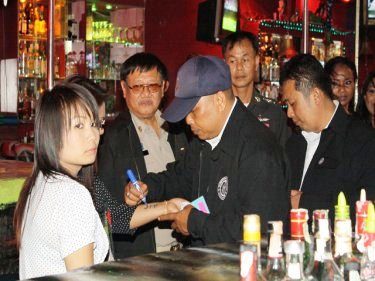
Phuket Public Health officials joined about 150 police and local authorities in another crackdown on Patong bars and other venues on and around Soi Bangla last night. Bar staff and sex workers were required to produce documentation. Employees and staff were tested for drugs.
- SANGRAM on USAID Website – 2011
After all the drama of the US government accusing PLRI and NSWP partner SANGRAM of being traffickers because they returned US money rather than sign its anti prostitution pledge, SANGRAM triumphs! A SANGRAM case study has been posted on USAID’s AIDSTAR-One website.
- Selling Sex: Analyzing the Improper Use Defense to Contract Enforcement Through the Lens of Carroll v. Beardon – 2011
Article from Julie M. Spanbauer of the The John Marshall Law School.
- Sex trafficking in Cambodia: Fabricated numbers versus empirical evidence – 2011
An article in Crime, Law and Social Change Volume 56, Number 5, 443-46.
- Sex Work to be legalised in Rwanda?
Kigali — The Deputy Speaker of Parliament, Jean Damascene Ntawukuriryayo, said yesterday, that Parliament could revisit a law banning prostitution which is currently before the Senate, days after the UNAIDS Regional Director – Eastern and Southern Africa, Prof Sheila Tlou, appealed to legislators to do so.
- Sex Work, Criminalisation and HIV
This article examines the reasons that there is less support for legalising sex work than homosexuality and drug use.
- Sex Workers should not be criminalized This newsletter from Community Socio Economic Development Initiatives (CSDI) covers the proceedings of a meeting held on the 22nd and 23rd of February 2010. The meeting brought together Rwandan civil society organisations working on HIV & AIDS, health promotion and human rights and was lead by the Rwanda NGO Forum on AIDS Health Promotion and Fact Rwanda. The purpose of the meeting was to discuss the provision in the draft penal code that would criminalize sex work. This legal provision, article 225, would sentence sex workers to 3 years in jail and a fine of 50.000 to 500.000 RWF.
- Streetwalkers Show the Way: Reframing the Global Debate on Trafficking from Sex Workers’ Perspectives This paper documents action research and discussions on trafficking by Durbar, a network of 60,000 female, male and transgender sex workers in India. Durbar finds that the realities of trafficking as experienced by sex workers are very different from the myths. Durbar’s research found that while most of the sex workers they interviewed were poor and lacked options, they left home by their own choice, in search of better livelihoods, to escape violence or drudgery, or to seek love.
- Taking the Pledge
A short film by the International Network of Sex Work Projects. Taking the Pledge features sex workers from Bangladesh, Brazil, Cambodia, Mali, Thailand and more. They describe the problems created by the ‘anti-prostitution pledge’ required to receive USAID and PEPFAR funds. In English, Khmer, Thai, French, Portuguese and Bengali, with English subtitles. Watch in full-screen mode to read the subtitles.
- The African Sex Worker Alliance launch new research on human rights
 The African Sex Worker Alliance (ASWA), Bar Hostess, Sisonke and SWEAT in conjunction with the Ford Foundation, OXFAM NOVIB, UNDP and OXFAM GB are to launch research on human rights violations against sex workers.
 - The Asia Pacific Network of Sex Workers
The Asia Pacific Network of Sex Workers provides this window on the internet for all the issues affecting male, female and transgender sex workers in the region that is home to half of the population of the world.
- UN Independent Commission on Aids and the Law.
The UN has established an Independent Commission on AIDS and the Law to develop actionable, evidence-informed and human rights based recommendations for law and policy reform, which will facilitate supportive national legal environments. The Commission will focus on some of the most challenging legal issues in the context of HIV, including criminalization of HIV transmission and behaviors and practices such as drug use, sex work and same sex sexual relations.
- Understanding the Context of HIV Risk Behavior Among HIV-Positive and HIV-Negative Female Sex Workers and Male Bar Clients Following Antiretroviral Therapy Rollout in Mombasa, Kenya
Article in AIDS Educ Prev 2011 Aug;23(4):299-312.
- Using human rights to address consequences of criminal laws on sexuality and reproductive autonomy
Laws criminalising behaviour in the context of HIV and sexual and reproductive autonomy directly and indirectly violate fundamental rights of people belonging to some of the most vulnerable groups in society. States have a duty to protect and provide for the health, life and safety of their people, which includes ensuring that the consequences of policies and legislation do not infringe upon the basic tenants of human rights law.
PLRI is committed to examining the strengths and weaknesses of international human rights and domestic legal frameworks as they apply to sex work. We aim to evaluate the impact of various international and domestic laws and policies on the human rights of female, male and transgender sex workers and their communities.
Sex workers universally claim that their human rights are abused. In some cases this means exposure to violence and barriers to accessing services, resources and justice. In other cases arbitrary detention, criminal law and lack of access to clean safe places to live and work are cited as human rights issues.
International human rights standards and norms have traditionally constructed sex work as an affront to human dignity and as a result have failed to endow sex workers with the range of rights normally accorded to others unimpeded by occupational or moral status. The conflation of adult female prostitution with trafficking and child abuse that has occurred this decade has lead to the revival of law enforcement in many countries which appears to have lead to human rights abuses.
Questions about what legal and policy approaches can best protect sex workers, clients and the broader society are of great importance to sex worker advocates. PLRI seeks to illuminate a range of issues around law and human rights in respect of sex work and aims to resource sex workers to engage in local, national and international debates about what mix of laws and policies can best protect and advance their human rights.
- The Tragedy of Human Trafficking: Competing Theories and European Evidence† – 2012
This paper explores an issue that is both domestic and international: whether legalization of prostitution leads to an increase in human trafficking. For both theory and public policy, this is an important query to answer, with implications beyond the cases in question. The principal domains of investigation are Germany, Sweden, and the Netherlands. These states subscribe to UN, EU, Council of Europe and OSCE agreements and are located in the same geographic region, yet have adopted opposite approaches to prostitution.
- Violence Against Chinese Female Sex Workers in Hong Kong: From Understanding to Prevention – 2012
Violence against sex workers is considered a global phenomenon. Despite this, very little is known about the patterns and nature of this form of violence. This article is concerned with violence against Chinese female sex workers in Hong Kong. Based on a systematic analysis of 75 police case files, it was found that violent attacks on sex workers display clear temporal and spatial patterns, and that perpetrators share certain characteristics.
- Whore’s Glory – 2012
WHORES’ GLORY is a film on prostitution: three countries, three languages, three religions. In Thailand, women wait for clients behind glass panes, staring at reflections of themselves. In Bangladesh, men go to a ghetto of love to satisfy their unfulfilled desires on indentured girls. And in Mexico, women pray to a female death to avoid facing their own reality.
- Effectiveness of an Adapted Evidence-Based Woman-Focused Intervention for Sex Workers and Non-Sex Workers: The Women’s Health Co-op in South Africa – 2011
An article in the Journal of Drug Issues, Volume 41, Issue 2, Spring 2011, p.233-252.
- Facilitating access to sexual health services for men who have sex with men and male-to-female transgender persons in Guatemala City – 2011
Article in Culture, Health and Sexuality.
The purpose of this study was to identify barriers to accessing sexual health services among gay, bisexual and heterosexual-identifying men who have sex with men and male-to-female transgender persons in Guatemala City, to inform the development of high quality and population-friendly services. In-depth, semi-structured interviews were conducted with 29 purposively sampled individuals, including 8 transgender, 16 gay/bisexual and 5 heterosexual-identifying participants.
- Sex Work and Feminism – 2011
This is a clear article that outlines debates around feminism and sex work by Australian activist Kate Holden.
- Bedford v. Canada: a paradigmatic case toward ensuring the human and health rights of sex workers – 2011
Article in HIV AIDS Policy Law Rev. 2011 Oct;15(3):1, 5-14.
- Listen to sex workers: support decriminalisation and anti-discrimination protections – 2011
Article in Interface: a journal for and about social movements, Volume 3(2): 271 – 287 (November 2011).
Despite the massive achievements of the Prostitutes Collective of Victoria and the historic significance of this important organisation, sex workers as a community and the funds we had attracted drew an unhealthy level of interest from the health and community sector, stemming from a perception that sex workers were politically unable to run their own collective, and that the funds we had lobbied for could be better spent by people who were not sex workers.
- Measuring perceived stigma in female sex workers in Chennai, India – 2011
Although sex work is highly stigmatized throughout the world, a limited body of research has examined stigma among female sex workers (FSWs). We developed a Sex Worker Stigma (SWS) Index to measure perceived stigma among 150 FSWs in Chennai, India. These women were at a median age of 35 years and reported, on average, having engaged in sex work for nine out of the previous 12 months. The two-factor structure of the index was verified in both exploratory and confirmatory factor analyses with acceptable goodness of fit.
- Sex Trafficking and Initiation-Related Violence, Alcohol Use, and HIV Risk Among HIV-Infected Female Sex Workers in Mumbai, India – 2011
The control of HIV and other sexually transmitted infections (STI) is a challenge in China, with female sex workers (FSW) and male clients suspected as bridge groups. This study used a 2006 national probability survey of 2,707 adult men. Among men 15–49 years old, the prevalence of FSW contacts last year was 4.2% (95% CI, 3.3–5.2) overall, with 7.2% (CI, 5.9–8.7) in urban and 1.8% (CI, 1.0–3.3) in rural areas.
- Proposal to European Parliament recommending the Swedish Model – 2014
Mary Honeyball, Labour’s Spokesperson on the European Parliament’s Women’s Rights and Gender Equality Committee, has been a vocal supporter of anti-sex work legislation and has written a report to the European Parliament recommending the Swedish Model, which criminalises the purchase of sex. In a blog leading up to the discussion Alex Bryce and other prominent service providers in the UK condemn the move and encourage the Parliament to listen to sex workers.
- Modern Prostitution Reform and the Return of Volitional Consent – 2014
For decades, prostitution laws in America have focused exclusively on contractual consent: the agreement to exchange sexual services for a fee. Courts and legislatures alike ignored volitional consent, or traditional mens rea, by concentrating on the offer and acceptance of the prostitution agreement. In this way, the law disregarded the actor’s choice to engage in the crime. The de facto strict liability nature of the offense rendered it nearly impossible for prostitutes to successfully raise the defenses of duress and necessity.
- Modern Prostitution Reform and the Return of Volitional Consent – 2014
For decades, prostitution laws in America have focused exclusively on contractual consent: the agreement to exchange sexual services for a fee. Courts and legislatures alike ignored volitional consent, or traditional mens rea, by concentrating on the offer and acceptance of the prostitution agreement. In this way, the law disregarded the actor’s choice to engage in the crime. The de facto strict liability nature of the offense rendered it nearly impossible for prostitutes to successfully raise the defenses of duress and necessity.
- Never Innocent Victims:Street Sex Workers in Canadian Print Media – 2014
Over the past decade, street sex workers and their families garnered considerable media attention through extensive coverage of disappeared and murdered women in Western Canada. The research presented here examines whether recent media accounts differ from past coverage given that families and friends of disappeared and unaccounted for women inserted themselves into media discussions and circulated alternative readings of their stories.
- Participation in Prostitution: Associated Outcomes Within Familial Relationships – 2014
An analysis if different political conceptualisations of sex work.
- “Custody and Education”: Arbitrary Detention for Female Sex Workers in China – 2013
The Chinese government is arbitrarily detaining sex workers through a flawed government policy purportedly aimed at education and rehabilitation, Asia Catalyst said in a new report released today. The report documents excessive use of force by police in the detention of female sex workers, as well as the women’s subsequent incarceration in the little-known “Custody and Education (C&E)” system.
- Sex Work and Human Rights – 2013
A useful outline of sex workers rights including the right to health
- A Regressive Move Which Would Further Stigmatise and Endanger Sex Workers – 2012
Last week Rhoda Grant MSP and Lord Morrow were invited to speak about their respective proposals to criminalise the purchase of sex in Scotland and Northern Ireland at an event in the House of Commons tellingly entitled ‘Prostitution and Sexual Exploitation: Tackling Demand in the UK’.
These proposals represent a radical change to the criminal law in this area and, if passed, would have severe consequences for sex workers. They are not supported by public opinion, academic evidence, sex workers themselves or by the majority of those delivering front-line support to sex workers.
- Common Prostitutes and Ordinary Citizens: Commercial Sex in London, 1885-1960 – 2012
- Condom Use among Female Commercial Sex Workers in Nevada’s Legal Brothels – 2012
Nevada is the only US state in which commercial sex is legal. Since 1971, counties of fewer than 400000 people
have been able to elect to legalize brothels. At present, there are 32 legal brothels employing about 300 licensed prostitutes. Licensed brothel sex workers undergo weekly state-mandated medical examinations for gonorrhea, herpes, and venereal warts and monthly blood tests for syphilis. In March 1986, the Nevada Board of Health began requiring a negative initial human immunodeficiency virus (HIV) antibody test and negative monthly tests thereafter as a condition of employment. If a brothel worker or applicant is found to be seropositive, her employment is immediately terminated or denied.
