

- Motivations for entry into sex work and hiv risk among mobile female sex workers in India. – 2011
This paper assesses the reasons for entry into sex work and its association with HIV risk behaviours among mobile female sex workers (FSWs) in India. Data were collected from a cross-sectional survey conducted in 22 districts across four high HIV prevalence states in India during 2007-2008. Analyses were limited to 5498 eligible mobile FSWs. The reasons given by FSWs for entering sex work and associations with socio-demographic characteristics were assessed.
- Pan-India Survey of Sex Workers – 2011
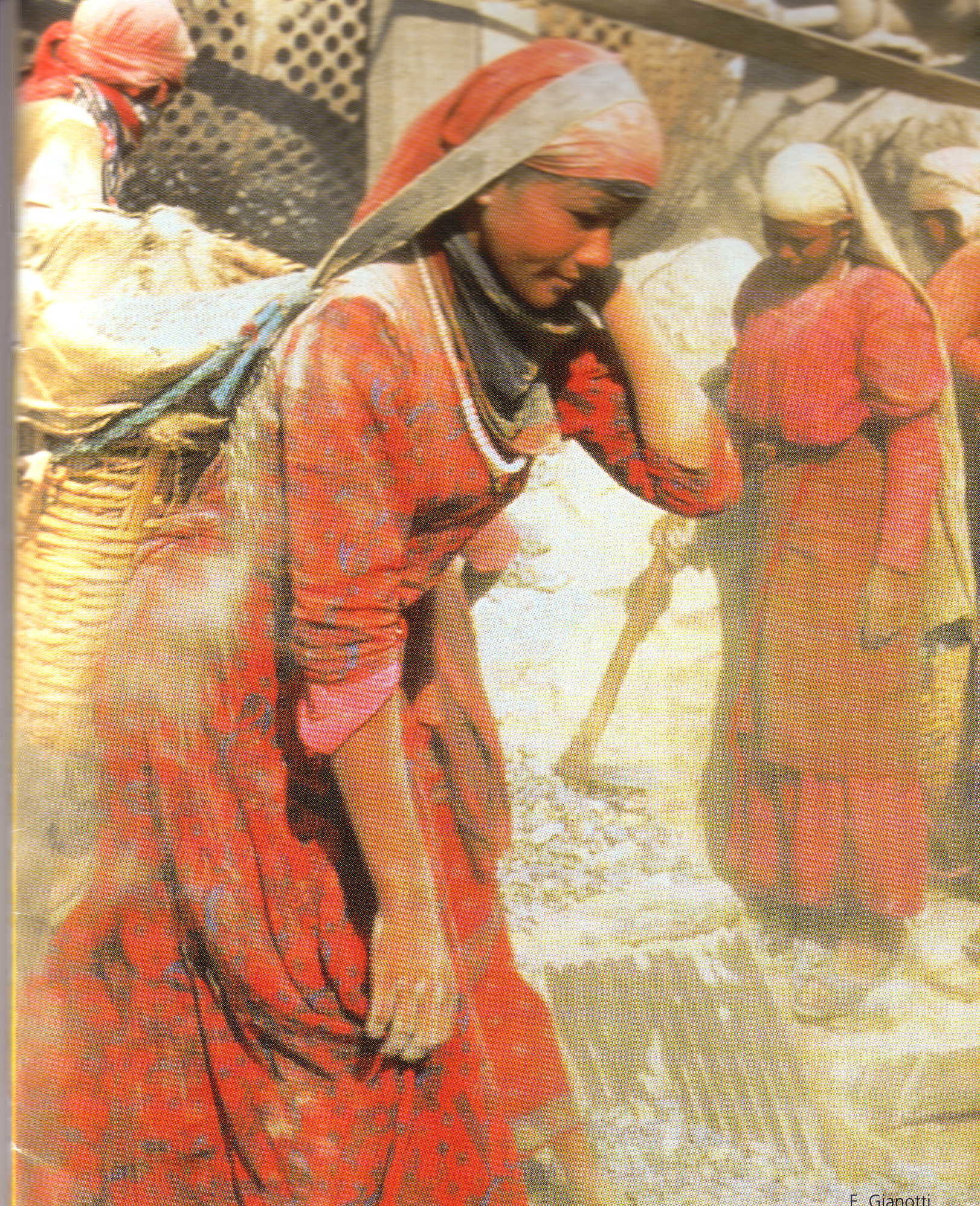 This survey of female sex workers found that poverty and limited education push women into several kinds of work including sex work. Therefore, sex work cannot be considered as singular or isolated in its links with poverty, as other occupations are pursued before sex work emerges or is considered as an option. Sex work may also be regarded as offering a significant supplementary income to other forms of labour.
 - Per diems in Africa: a counter-argument – 2011
This article suggests tht ‘An open and frank discussion about the extent and impact of per diems on the functioning of health interventions, systems and research’ While the ‘culture of per diems’ can be associated with civil servants involved in health care projects and delivery, we suggest that a more balanced argument would be presented, if per diems were discussed in relation to macroeconomic and structural influences…All actors in global health should be named and examined accordingly.
- South Korean Sex Worker Protests – 2011

Korean sex wokrers protest against a law against trafficking and sexual exploitation that has taken away the incomes and dignity of these women – not a law against prostitution.
News story in the Globe News, 17 May 2011.
SEOUL, South Korea (AP) – Hundreds of prostitutes and pimps rallied Tuesday near a red-light district in Seoul to protest a police crackdown on brothels, with some unsuccessfully attempting to set themselves on fire.
- The International Association for the Study of Sexuality, Culture and Society 2011 Conference: A summary of the content related to sex work – 2011
- The price of sexual services in nightclubs and massage parlors of San José, Costa Rica: biological and anthropological interpretations – 2011
Humans and other primates exchange sex for resources. In the case of humans, this exchange includes sexual work. There are few previous studies on sex work in San José, Costa Rica that include data on how much is paid for sexual services. We studied the price of female sex work, and how the profits are distributed among all parties, in nightclubs and massage parlors, by obtaining data from interviews with workers and owners, and from telephone calls, from 1994 through 2010.
- “Maybe it will be better once this World Cup has passed” Research findings regarding the impact of the 2010 Soccer World Cup on Sex Work in South Africa – 2011
International sporting events are increasing in frequency and magnitude. It is estimated that the FIFA World Cup brought close to 400 000 visitors to South Africa in 2010. Little research has been conducted into the demand and supply of paid sex during big sporting events and where the topic has been explored, the focus tends to fall on speculation around human trafficking for the purposes of sexual exploitation, rather than on adult, consensual sex work.
- A right to be: A film about sex work in the Caribbean – 2010
A film from the Caribbean Treatment Action Group and the Caribbean Vulnerable Communities Coalition about the problems faced by sex workers in the Caribbean. There is a focus on migrant workers, HIV, abuse from the state, stigma and discrimination from the community and efforts to overcome them.
- Acceptability of a Microenterprise Intervention Among Female Sex Workers in Chennai, India – 2010
This research evaluated changes in HIV risk taking as a result of sex workers sewing hessian bags in India. “Intervention participants reported a significantly lower number of sex partners and significant increases in income at the 6-month follow-up compared to control participants. In a multivariate model, intervention participants had a significantly lower number of paying clients per month at follow-up compared to control participants.
- Access to HIV testing for sex workers in Bangkok, Thailand: A high prevalence of HIV among street-based sex workers – 2010
Article in the South East Asian Journal of Tropical Medicine and Public Health, Vol 41 No. 1 January 2010.
- Demanding Sex: Critical Reflections on the Regulation of Prostitution – 2008
This book is edited by Vanessa Munro and Della Giusta and was published in 2008.
- Sex Work and Economics – A rapid annotated bibliography – 2008
An annotated bibliography by Greenall M that explored the literature on sex work and economics and ordered the resources into the following categories:
- A survey of the various types of social, physical and occupational oppressions heaped upon our sex workers before and after their entry into sex work – 2007 The survey has was conducted by the Durbar Mahila Samanwaya Committee (DMSC), a forum representing the interest of more than 60,000 sex workers of West Bengal, India. Sex workers, who had a past history of marriage, were considered for the study. A predetermined sample of 200 was found to be sufficient for this study, based on the existing research data on the incidence of violence in the domestic settings.
- Food Insufficiency Is Associated with High-Risk Sexual Behavior among Women in Botswana and Swaziland – 2007
An article by Sheri D Weiser, Karen Leiter, David R Bangsberg, Lisa M Butler, Fiona Percy-de Korte, Zakhe Hlanze, Nthabiseng Phaladze, Vincent Iacopino, Michele Heisler in PLoS Med 4(10): e260. doi:10.1371/journal.pmed.0040260.
- Review of the Evidence Base for an “Evidence-Based” Policy on HIV Programming with Sex Workers – 2007
A literature review produced by Matt Greenall.
- The Economics of the Commercial Sex Industry – 2007
A report by Ahlburg, D and Jensen, E. Commercial sex is a service and the non-price determinants of the demand for commercial sex are the same as for other commodities or services: the number of potential consumers, their preferences and incomes, the prices of other commodities and services, and perhaps their expectations of future prices and income. Since males, particularly single or divorced males, are the main demanders of commercial sex, an increase in their numbers can increase the demand for commercial sex.
- The necessary contradictions of ‘community-led’ health promotion: a case study of HIV prevention in an Indian red light district – 2007 An article by Cornish F, Ghosh R in Social Science and Medicine Jan;64(2):496-507.
- HIV Positive Sex Workers and Poverty – 2004
Abstract from the Int Conf AIDS. 2004 Jul 11-16; 15: abstract no. WePeC6224.
Issues: Female sex workers (FSWs) are considered to be one of the high-risk groups driving the epidemic of HIV/AIDS because of exposure to multiple partners and inconsistent use of condoms. Poverty has also been fingered as a twin problem militating against the effective prevention and impact mitigation of HIV/AIDS in Nigeria among this group. This study aimed at assessing the knowledge, attitude and practice of sex workers in relation to HIV/AIDS and poverty.
- The Sonagachi project: A sustainable community intervention program – 2004
An article by Jana, S, Basu, I, Rotheram-Borus, M.J., and Newman, P.A in the journal AIDS Education and Prevention 16(5), 405-414.
- Who gets to choose? Coercion, consent and the UN – 2002
- Better livelihood prospect drives poor Indian women to prostitution – 2011
An article by Subir Ghosh in Digital World published on the 1 May 2011.
New Delhi, India. Four out of five female sex workers in India have joined the profession voluntarily; they were not forced or sold into it. Prostitution is just one among several livelihood options available to women from poor backgrounds, says a new survey.
- Choice in the labour market – sex work as “work” – 2011
A blog post by Nivedita Menon on Kafila, 6 May 2011.
The summary of preliminary findings of the first pan-India survey of sex-workers is now available on-line. 3000 women from 14 states and 1 UT were surveyed, all of them from outside collectivised/organised and therefore politically active spaces, precisely “in order to bring forth the voices of a hitherto silent section of sex workers.”
The significant finding is this: About 71 percent of them said they had entered the profession willingly.
- Cost effectiveness of targeted HIV prevention interventions for female sex workers in India – 2011
Article in Sex. Transm. Infect. 2011;87:263.
Objective To ascertain the cost effectiveness of targeted interventions for female sex workers (FSW) under the National AIDS Control Programme in India.
- Demystifying Sex Work and Sex Workers – 2011
Wagadu, an open access online feminist journal, has released a special issue ‘Demystifying sex work and sex workers.’ With articles from activist scholars the special issue, focuses on the everyday lives of sex workers.
Susan Dewey of the University of Wyoming who edited the issue explains, “While recent years have witnessed a dramatic outpouring of feminist scholarship that situates sex work within its broader socioeconomic and political contexts cross-culturally, there remains a tendency for academic scholarship to unconsciously reinforce the social stigmatization of sex workers by depicting them solely through their income-earning activities. This burgeoning research has convincingly demonstrated that sex work is embedded in a complex social matrix that often centers upon sex workers’ perceptions of their individual choices and responsibilities…Public policy on sex work is often shown to be seriously lacking when contextualized within the broader realities of many sex workers’ everyday life experiences throughout the world. As such, contributors to this special issue offer sound ethnographic evidence that clearly demonstrates the global need for policy and legal reform with respect to sex work.”
- Draft of new Global Declaration on the Rights of Sex Workers – 2011
The following is a draft declaration on sex workers rights and introductory article. Thank you very much to those who made inputs.
The process used to develop this was to copy the ICRSE declaration format and cut and paste material from all documents together into the sections then edit them down to about 20% of the length. This means that the document attached comprises sentences and bits of sentences from various documents by sex workers and allies.
- Enhancing Withdrawal Cognition Through Client-Centred Approach in HIV/AIDS Pandemic Risk Reduction Among Commercial Sex Workers in Oyo State, Nigeria. – 2011
The study adopted client–centred approach to enhance withdrawal cognition in commercial sex workers in four Local Government Areas of Oyo State, Nigeria. Withdrawal Cognition Scale by Laim and Tabaka (1995) was used to elicit information from 160 sex workers in four randomly selected Local Government Areas of Oyo State, Nigeria. The purpose of the study was to control the spread of HIV/AIDS among sex workers who earn their living in the sex trade. The study also aims to give them knowledge and skills required to earn a living from less dangerous activities.
- From rice fields to red light districts: An economic examination of factors motivating employment in Thailand’s sex industry – 2011
This research identifies factors that distinguish rural women who have migrated to Bangkok for the purpose of enhancing their economic wellbeing by engaging in the sex industry and those who have stayed in their rural communities and are not engaged in the sex industry. The research used primary data collected through interviews in the red light districts of Bangkok and Pattaya and in villages in rural provinces in Thailand. A total of 100 respondents provided information for the study: 55 percent from the red light districts and the remainder from the provinces.
- Harsh realities: Reasons for women’s involvement in sex work in India – 2011
This study, in the Journal of AIDS and HIV Research Vol. 3(9), pp. 172-179, documents the reasons and processes for involvement of women into sex work in India. The study is based on in-depth interviews with a cross-section of commercial sex workers in four Indian states – Maharashtra, Tamil Nadu, Karnataka and Andhra Pradesh. It shows that most women enter sex work due to a complex set of reasons as opposed to any one single over-riding reason.
- Is sex work exploitation? A discussion at the launch of the pan-India survey – 2011
- Majority of female sex workers join the trade voluntarily-survey says – 2011
A news story in the Health(Y) Destination on May 1 2011.
A recent survey conducted at Pune reveals that 70 percent of the female sex workers join the trade voluntarily and they were not forced or sold.
Most of the sex workers join the trade only in their later age after relieved from other labour such as domestic work and construction of building work. It is revealed that the sex work is also felt by them as that of the other labour work.
The findings were revealed by a survey conducted by ‘First pan-India survey of sex workers’ at Pune University.
- The State of Sex: Tourism, Sex and Sin in the New American Heartland (Contemporary Sociological Perspectives) – 2010
The State of Sex is a study of Nevada’s brothels that situates the nation’s only legal brothel industry in the political economy of contemporary tourism. Nevada is part of the “new American heartland,” as its pastimes, people, and politics have become more central to the nation. The rise of a service and leisure economy over the past sixty years has propelled sexuality into the heart of contemporary markets. Yet, neoliberal laws in the United States promote business but limit sexual commerce.
- Video from SANGRAM: Durga’s story – 2010
This film from SANGRAM explores how organising as part of VAMP has affected sex workers’ lives.
- When I dare to be powerful – Sex Worker Oral Herstory – 2010
A Publication by Akina Mama wa Afrika (AMwA), written by Zawadi Nyong’o and edited by Christine Butegwa and Solome Nakaweesi-Kimbugwe.
AMwA has been working in partnership with sex worker activists in Uganda and other countries in East Africa. This oral history project allowed women to speak for themselves to try and better understand the politics behind sexuality, sexual rights and sex work.
The research tries to present the multiple dimensions of women’s lives,
- ‘Mobile Love Videos Make Me Feel Healthy’: Rethinking ICTs for Development – 2010
Author’s summary: Development discourse tends to limit attention to the contribution of information and communications technologies (ICTs) to economic and educational empowerment, largely ignoring other potential areas for empowerment. This paper explores interactions between people and communication technologies in relation to sexuality through the lens of a specific community and its use of mobile phones…
- Effects of Micro-Enterprise Services on HIV Risk Behaviour Among Female Sex Workers in Kenya’s Urban Slums – 2009
An article by Odek, W.O.; Busza, J.; Morris, C.N.; Cleland, J.; Ngugi, E.N.; Ferguson, A.G in AIDS and Behavior, 2009; 13(3):449-461.
- The Social Conditions for Successful Peer Education: A Comparison of Two HIV Prevention Programs Run by Sex Workers in India and South Africa – 2009
An article by Cornish F & Campbell C in the American journal of community psychology, 44 (1-2). pp. 123-135. ISSN 0091-0562. Peer education is a community-based intervention being implemented worldwide as an approach to HIV prevention. However, its results are inconsistent, with little consensus on why some projects succeed while others fail.
- Trying to give sex workers safer alternatives – 2009
A news story on PlusNews that explores plans to offer sex workers loans in return for exiting sex work. It explores the debate about rights vs rehabilitation with reference to the OSI report ‘Rights not Rescue’, research by SWEAT and interventions run by the Reproductive Health & HIV Research Unit (RHRU) of the University of Witwatersrand, in Johannesburg .
- What’s Money Got To Do With It?: Risky Behavior in Commercial Sex Work in Managua, Nicaragua – 2009
This article focuses on the capabilities of women in sex work—a sector in which a substantial number of women in developing countries find themselves. Sex workers confront important unfreedoms—violence and disease—on a daily basis. How well sex workers can manage these threats has implications not only for the workers themselves but also their families and communities, and thus is an important concern in development policy.
- “What countries have legal prostitution?” – 2008
This is a list of countries laws on sex work. Some entries are not accurate and terms are not used consistently but it is a useful ‘rough guide.’
- Avahan: Community Mobilisation in Avahan – 2008
A presentation by the Bill and Melinda Gates Foundation at the Mexico IAS Conference – NACO Satellite Session August 3, 2008. It provides a thorough account of how the Foundation’s HIV prevention project in India, Avahan, mobilises communities to deliver HIV prevention and care services to female sex workers and ‘MSM’ and transgender sex workers. This community mobilization has involved addressing a range of challenges so there is much to learn from the AVAHAN initiative see their website.
Although it is well accepted that sex work and poverty, stigma and inequality are linked, too often simplistic assumptions about these factors lead to ineffective, and even harmful, programmes and policies. PLRI aims to establish broader understandings of the economics of sex work and relate them to the challenges of optimising the benefits of economic programs and policies on development, human rights and public health outcomes. We are also committed to helping establish broader understandings of the economics of the sex sector, the demand for, and supply of, commercial sex; the factors that determine prices and behaviours within sex industries, the economic re-distributional effects of commercial sex and the impact of economic trends on people that buy, sell or trade sexual services. To achieve this PLRI research will analyse sex work economies as they relate to social protection, livelihoods strengthening and equitable development policy and programming.
- Working Misunderstandings:Donors, Brokers and Villagers in Africa’s AIDS Industry – 2014
Why do development projects, and AIDS projects in particular, take the forms they do? In this essay we argue that it is because the conflicting interests and world views of the key actors involved—donors, brokers, and villagers—leave only a narrow range of themes and practices that can “work” on the ground.
- Poverty as a Contextual Factor Affecting Sexual Health Behavior Among Female Sex Workers in India – 2013
A thorough understanding of the environmental and structural factors that precipitate unsafe sexual practices is necessary for HIV/AIDS-prevention research among high-risk population groups like commercial sex workers. I examined how poverty contextualizes sexual health behavior, including condom compliance among commercial female sex workers in a red light district in Calcutta, India. For my research I did an ethnographic study and conducted in-depth interviews of 37 commercial female sex workers.
- There is no other option; we have to feed our families…who else would do it?”: The Financial Lives of Women Engaging in Sex Work in Ulaanbaatar, Mongolia – 2013
Introduction: This article provides an overview of the financial lives of 204 sex workers in Ulaanbaatar, Mongolia.
Methods: This paper presents findings from a computer-based, interviewer-administered baseline assessment administered with women recruited for participation in a randomized controlled trial testing the feasibility of a combined HIV risk reduction and savings-led microfinance intervention for women engaging in sex work in Mongolia.
- Trafficking in Human Beings. Ten Years of Independent Monitoring by The Dutch Rapporteur on Trafficking in Human Beings – 2013
The report ‘Trafficking in Human Beings, Ten years of independent monitoring’ marked the tenth anniversary of the establishment of the post of National Rapporteur as an independent monitoring mechanism of the Netherlands’ efforts to combat human trafficking. It also marked ten years of making recommendations, 200 in all. Many of those recommendations have been acted upon, the importance of some has receded and others have been regularly repeated.
- Banking Services for Sex Workers – 2012
There are a number of people who earn their living directly or indirectly through commercial sex work. Exploitation, vulnerability, forced labour; servitude, stigmatization characterizes Commercial Sex Workers (CSW). A sense of immorality, criminality, and informality associated with their work keeps them excluded from mainstream society.
- MARKET MORALITIES IN THE FIELD OF COMMERCIAL SEX – 2012
The website ‘Punternet’ contains customer service reviews (‘field reports’) of commercial sex encounters in the UK’s indoor sex market. Treating Punternet as a calculative device shows how ordinary understandings of morality underpin consumer markets, as field reports qualify commercial sex to produce understandings of ‘good value’.
- MARKET MORALITIES IN THE FIELD OF COMMERCIAL SEX – 2012
The website ‘Punternet’ contains customer service reviews (‘field reports’) of commercial sex encounters in the UK’s indoor sex market. Treating Punternet as a calculative device shows how ordinary understandings of morality underpin consumer markets, as field reports qualify commercial sex to produce understandings of ‘good value’.
- Old Age Financial Security in the Informal Sector: Sex Work in India – 2012
We assess old age financial security in a sample of sex workers in India. Our analysis, based on primary data for 240 former sex workers and 340 current sex workers in the states of Karnataka and Maharashtra, highlights three features of their economic situation. First, former sex workers economically outperform female-headed households in the general population.
- Piloting a Savings-Led Microfinance Intervention with Women Engaging – 2012
This paper describes a pilot study testing the feasibility of an innovative savings-led microfinance intervention in increasing the economic empowerment and reducing the sexual risk behavior of women engaging in sex work in Mongolia.
- Risk-Coping through Sexual Networks – 2012
Why do women engage in transactional sex? While much of the explanation is that sex-for-money pays more than other jobs, we use a unique panel data set constructed from 192 self-reported diaries of sex workers in Western Kenya to show that women who supply transactional sex develop relationships with regular clients, and that these clients send transfers in response to negative income shocks.
