

Our review suggests that despite the heavy HIV burden among female sex workers (FSWs) globally, data on the structural determinants shaping HIV transmission dynamics have only begun to emerge.
A thorough understanding of the environmental and structural factors that precipitate unsafe sexual practices is necessary for HIV/AIDS-prevention research among high-risk population groups like commercial sex workers. I examined how poverty contextualizes sexual health behavior, including condom compliance among commercial female sex workers in a red light district in Calcutta, India. For my research I did an ethnographic study and conducted in-depth interviews of 37 commercial female sex workers.
For decades, prostitution laws in America have focused exclusively on contractual consent: the agreement to exchange sexual services for a fee. Courts and legislatures alike ignored volitional consent, or traditional mens rea, by concentrating on the offer and acceptance of the prostitution agreement. In this way, the law disregarded the actor’s choice to engage in the crime. The de facto strict liability nature of the offense rendered it nearly impossible for prostitutes to successfully raise the defenses of duress and necessity.
For decades, prostitution laws in America have focused exclusively on contractual consent: the agreement to exchange sexual services for a fee. Courts and legislatures alike ignored volitional consent, or traditional mens rea, by concentrating on the offer and acceptance of the prostitution agreement. In this way, the law disregarded the actor’s choice to engage in the crime. The de facto strict liability nature of the offense rendered it nearly impossible for prostitutes to successfully raise the defenses of duress and necessity.
Social capital is important to disadvantaged groups, such as sex workers, as a means of facilitating internal group-related mutual aid and support as well as access to broader social and material resources. Studies among sex workers have linked higher social capital with protective HIV-related behaviors; however, few studies have examined social capital among sex workers in sub-Saharan Africa.
Introduction: This article provides an overview of the financial lives of 204 sex workers in Ulaanbaatar, Mongolia.
Methods: This paper presents findings from a computer-based, interviewer-administered baseline assessment administered with women recruited for participation in a randomized controlled trial testing the feasibility of a combined HIV risk reduction and savings-led microfinance intervention for women engaging in sex work in Mongolia.
This is an important study of the epidemiological literature on female sex workers. It shows us that for the first 30 years HIV affected and killed huge numbers of women who sell sex. Although the article does not make for happy reading we can take great comfort in knowing that the information here is about things that happenned before there was widespread access to ARV treatment.
Article in Interface: a journal for and about social movements, Volume 3(2): 271 – 287 (November 2011).
Despite the massive achievements of the Prostitutes Collective of Victoria and the historic significance of this important organisation, sex workers as a community and the funds we had attracted drew an unhealthy level of interest from the health and community sector, stemming from a perception that sex workers were politically unable to run their own collective, and that the funds we had lobbied for could be better spent by people who were not sex workers.
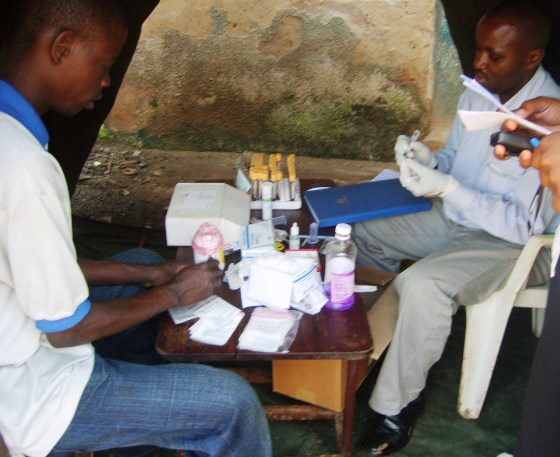
The aim of this study conducted in Benin was to compare HIV-1 infected female sex workers (FSW) and patients from the general population (GP) to see whether there was a difference in adherence level, mortality rate and immuno-virologic response to antiretroviral therapy (ART).
